| Primarily used in the United States and Canada, defining fire testing criteria for swinging fire doors in accordance with North American building codes. |  |
What is UL 10B and UL 10C?
UL 10B and UL 10C are core fire resistance standards for door assemblies developed by Underwriters Laboratories (UL), a globally recognized safety certification organization.
UL 10B covers swinging door assemblies (e.g., hinged fire doors), evaluating their ability to resist fire under controlled test conditions.
UL 10C extends to other door types such as sliding or folding doors, while maintaining alignment with UL 10B’s fire resistance principles.
Together, these standards serve as authoritative benchmarks for fire door safety in North America (U.S. and Canada) and internationally. Fire doors not certified under UL 10B/UL 10C cannot be installed or used in buildings governed by UL standards.
Why UL 10B / UL 10C Certification Matters?
1. Rigorous Fire Safety Assurance
Certification ensures fire doors withstand extreme heat (up to 1,700°F / 927°C) and maintain structural integrity for rated durations, effectively blocking fire, smoke, and toxic gases to protect escape routes and property.
2. North American Market Access
As required by U.S. and Canadian building codes (e.g., IBC), UL 10B/10C certification is essential for entering these regulated markets, removing compliance barriers for construction and commercial applications.
3. Global Safety Credibility
UL’s strict testing and impartial evaluation make UL-certified fire doors trusted worldwide, especially in Southeast Asia and the Middle East, enhancing global recognition and brand credibility.
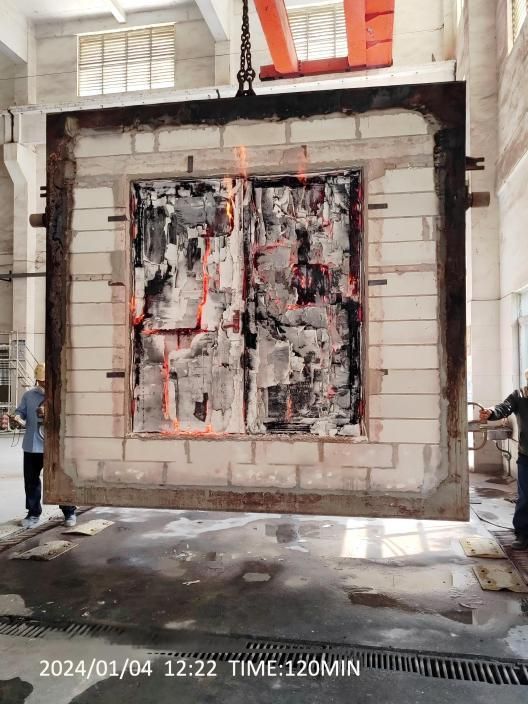
Core Significance and Certification Scope
Certification Scope:
Applies to fire door assemblies for commercial, industrial, and residential buildings, including steel fire doors, wooden fire doors, composite fire doors, and their associated components (door leaves, frames, hinges, latches, intumescent seals);
Key Testing Items:
Fire Resistance Test (UL 10B/10C): Evaluates fire integrity and thermal transmission. Common ratings include 20, 45, 60, and 90 minutes.
Operational Functionality: Ensures doors—especially sliding or folding types—operate normally before and after fire exposure.
Component Compatibility: Confirms that all hardware components are UL-listed and compatible, as non-listed parts invalidate certification.
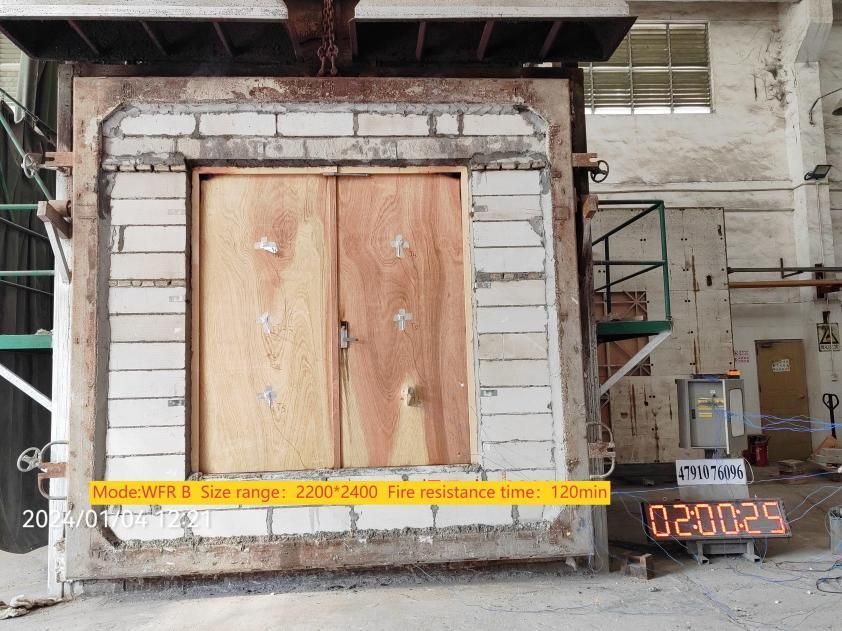
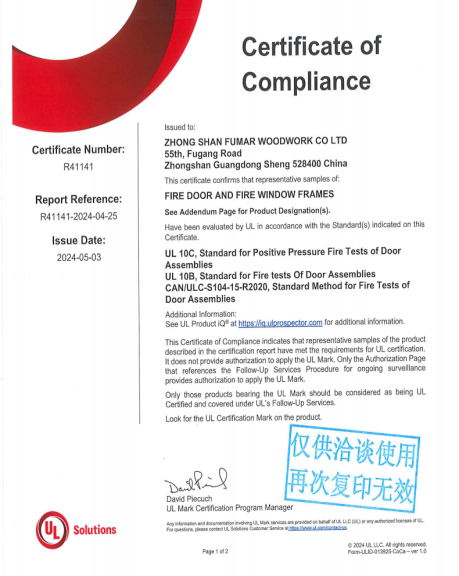
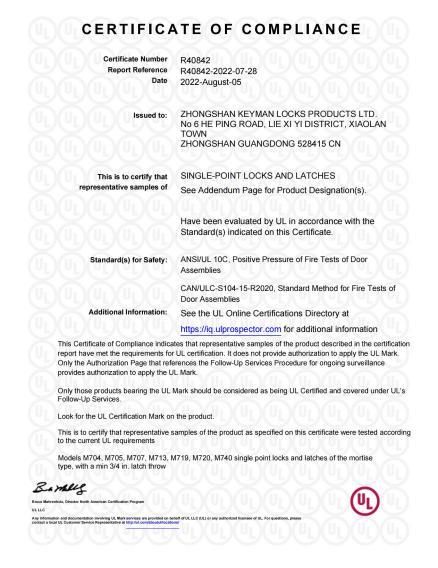
Certification of Compliance with UL 10C for Fire Doors:
 |  |